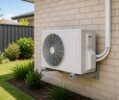

When winter rolls around in Perth, the heating debate always comes up: reverse cycle heating or gas heating? With mild winters, scorching summers, and rising energy costs, the choice matters more than ever for WA homeowners. This guide breaks down both options across every factor that counts running costs, efficiency, safety, indoor air quality, and long-term value. You can make a confident decision for your home.
Reverse Cycle Heating vs Gas Heating: At a Glance
| Feature | Reverse Cycle Heating | Gas Heating |
| How it works | Transfers heat from outside air into the home using refrigerant | Burns natural gas or LPG to generate heat via combustion |
| Heating & cooling in one unit | ✔ Yes — cools in summer, heats in winter | ✘ No — heating only; separate cooling required |
| Energy efficiency | ✔ Very high — 300–600% efficiency (moves heat, not creates it) | Moderate — varies by heater type, age and zoning |
| Running costs | Electricity usage; can be offset by rooftop solar | Gas usage plus ongoing daily supply charges |
| Indoor combustion | ✔ None — no fuel burned inside the home | ✘ Yes (unflued models); flued models vent outside |
| Indoor air quality | ✔ Cleaner — no combustion by-products or moisture | Ventilation required; unflued models add moisture and gases |
| Carbon monoxide risk | ✔ None | Risk exists with faulty or poorly maintained appliances |
| Installation | Professional split system install; scalable room by room | Requires gas connection; flued or ducted systems need additional work |
| Upfront cost | Higher than a portable gas heater; competitive vs ducted systems | Low if bayonet already exists; high for new ducted installations |
| Long-term value | ✔ Strong — one system for year-round comfort | Lower if a separate cooling solution is also needed |
| Solar panel compatibility | ✔ Yes — daytime heating/cooling can run on solar | ✘ No — gas does not benefit from rooftop solar |
| Perth climate suitability | ✔ Excellent — suits mild winters and hot summers | Good for existing setups; less ideal for new installs |
| Best for | Bedrooms, living rooms, home offices; targeted zone heating | Homes with a good existing gas system already in place |
Quick verdict: For most Perth homes, reverse cycle heating is the better long-term choice. It handles both heating and cooling, runs more efficiently, produces no indoor combustion gases, and works well with solar power. Gas heating can still make sense where a quality system is already installed, but for new installations, a reverse cycle split system offers more flexibility and value for WA conditions. Explore our heating solutions to find the right fit for your home.
What Is Reverse Cycle Heating?
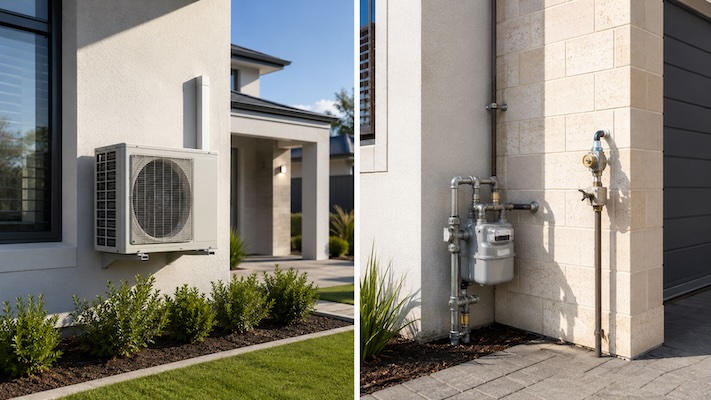
Reverse cycle heating is the heating mode built into a reverse cycle air conditioner. Rather than creating heat like a bar heater or portable electric appliance, a split system uses refrigerant and a compressor to transfer heat energy from the outdoor air into your home even on cool winter days, there is still usable heat energy in the air outside.
According to the Australian Government’s energy guidance, reverse cycle air conditioners available on the Australian market can achieve efficiency levels of around 300% to 600%, because they move heat rather than generate it from scratch. This is why they are so much cheaper to run than standard electric heaters.
For Perth homeowners, this technology is a natural fit. Our winters are mild compared with southern states, meaning a correctly sized split system can heat most rooms without working particularly hard and come summer, the same unit delivers powerful cooling when you need it most.
How Gas Heating Works
Gas heating uses natural gas or LPG and combustion to produce warmth. In Perth homes, this typically comes in one of three forms:
- Gas bayonet heaters: portable units connected to a wall gas outlet
- Flued gas heaters: fixed appliances that vent combustion gases outside the home
- Gas ducted heating: a central system that heats air and distributes it through ceiling or floor ducts
Gas heaters can produce strong, fast heat and are familiar to many WA households that have had gas connections for years. However, running costs, safety profiles and efficiency all vary significantly depending on the type of heater, its age, and how well the home is set up for zoning and ventilation.
Gas supply also carries ongoing daily charges on top of usage costs, a factor worth including in any long-term cost comparison.
Running Costs and Energy Efficiency
Running costs are often the deciding factor for Perth homeowners comparing these two systems.
A reverse cycle split system is inherently efficient because it transfers heat rather than generating it. For every unit of electricity used, a well-rated system can deliver three to six units of heating output. By contrast, a portable electric heater converts roughly one unit of electricity into one unit of heat and an unflued gas heater, while fast, still burns fuel at a fixed efficiency rate.
For many Perth households, reverse cycle heating works out cheaper to run over a season, particularly when:
- You are heating one room or zone at a time
- The split system is correctly sized for the space
- The home has reasonable ceiling and wall insulation
- The system carries a strong energy star rating
- You have rooftop solar that offsets daytime electricity use
Gas heating can be competitive if you are running an efficient ducted system across a large, well-zoned home. But heating rooms you are not using is a common source of waste with whole-home ducted gas setups something that targeted split systems avoid by design.
Safety and Indoor Air Quality
This is one of the clearest differences between the two systems.
Reverse cycle split systems do not burn any fuel inside the home. There are no combustion gases, no open flames, no carbon monoxide risk, and no moisture produced by combustion. For families with young children, elderly residents, or anyone managing asthma or respiratory sensitivities, this is a meaningful advantage.
Gas heaters, particularly unflued portable models burn gas inside the room. This can release moisture and combustion by-products into the indoor air. Adequate ventilation is essential, and regular servicing is important to manage carbon monoxide risks, especially with older appliances. Flued gas heaters vent outside and are safer in this respect, but they still require proper installation, clearances and maintenance.
None of this means gas heating is inherently dangerous when it is correctly installed, maintained, and used as directed. But removing combustion from the indoor environment entirely. Reverse cycle systems do, simplifies the safety picture considerably.
Gas Bayonet Heaters vs Reverse Cycle Split Systems
Gas bayonet heaters are common across Perth homes. They plug into a wall gas outlet and can provide quick, strong warmth with a relatively low upfront cost particularly if the bayonet connection is already in place.
Their main limitations are that they only provide heating (no summer cooling), some unflued models require strong ventilation, they can add moisture to the room, and they do not offer the efficiency levels of a modern split system.
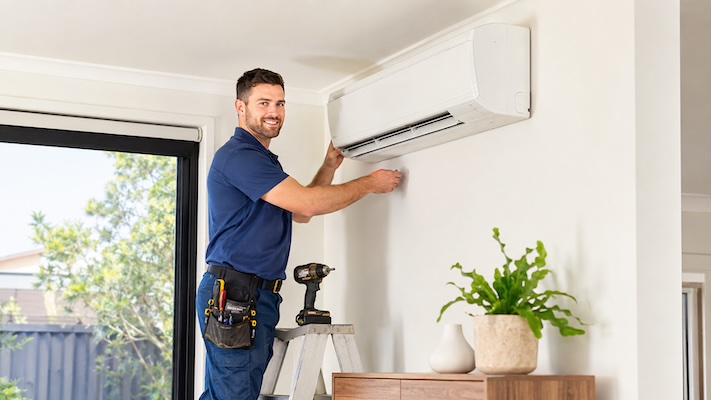
A reverse cycle split system costs more to install initially, but it provides year-round comfort from a single unit, runs more efficiently, and does not require a gas connection. For a main living room or bedroom that is used regularly throughout both summer and winter, the split system will almost always deliver better value over time.
Gas Ducted Heating vs Reverse Cycle Split Systems
Ducted gas heating can be a practical solution in larger homes where the system is already installed and in good working order. It heats multiple rooms simultaneously through ceiling or floor ducts and can feel very comfortable in cold conditions.
The challenges are well known:
- High installation costs for new systems
- Heat loss through poorly insulated ductwork
- Heating unused rooms if zoning is poor
- No cooling capability without a separate system
- Increasing maintenance and replacement costs as the system ages
Reverse cycle split systems offer more flexibility. You can start with one unit in the main living area and add systems to bedrooms or other high-use spaces over time. Multi-split or ducted reverse cycle systems are also available for households that want whole-home coverage without relying on gas.
Perth households tend to use their homes in specific zones, a family room in the evening, bedrooms overnight rather than heating every room at once. Split systems match this pattern far more efficiently than whole-home ducted gas.
Portable Gas Heaters vs Reverse Cycle Heating
Portable gas heaters are appealing because they are inexpensive to buy and produce immediate warmth. For occasional or emergency heating, they can serve a purpose. But for regular nightly use through a Perth winter, the picture changes.
Regular use of portable gas heaters raises ongoing considerations around ventilation, moisture, indoor air quality, gas access points, and safety around children and pets. They also provide no summer cooling, meaning you will need a separate system regardless.
A properly installed reverse cycle split system is quieter, more efficient for regular use, safer from an indoor air perspective, and useful across all seasons. For any Perth household heating most evenings through the cooler months, reverse cycle heating is a sounder long-term investment.
Installation Costs and Long-Term Value
The upfront cost comparison depends heavily on what is already in the home. If a gas bayonet is already installed, buying a portable gas heater looks cheaper than fitting a split system — but that comparison ignores ongoing gas supply charges, servicing costs, and the fact that you will still need a cooling solution for summer.
Reverse cycle split systems cost more upfront, but they replace both your heater and your air conditioner with a single efficient unit. That changes the value calculation significantly.
There is also a broader energy context to consider. Australia’s energy landscape continues to shift towards efficient electric appliances, and many Perth households with rooftop solar are finding that electric systems can now run at very low net cost during daylight hours. Installing another gas appliance with ongoing supply fees and no ability to benefit from solar, is a decision worth thinking through carefully.
If you are already planning a heating upgrade, our heating page covers the systems we supply and install across Perth, including options for single rooms, whole homes, and multi-split configurations.
Which Heating System Is Right for Your Perth Home?
For most Perth homes particularly those without an existing gas system already in good condition, reverse cycle heating is the stronger all-round option. Perth’s climate is defined by hot summers and mild winters, and a reverse cycle split system addresses both seasons efficiently from a single installation.
Reverse cycle heating is likely the better fit if you:
- Want one system for both heating and cooling
- Mainly heat individual rooms such as a living area, bedroom or home office
- Are replacing an older heater or an inefficient system
- Have or are considering rooftop solar panels
- Prefer not to burn fuel indoors
- Want to reduce reliance on gas appliances long-term
- Are after targeted, zone-by-zone comfort control
Gas heating may still suit your home if you:
- Already have a good-quality ducted or flued gas system installed
- Only heat your home occasionally through the cooler months
- Have a well-zoned ducted system that works efficiently for your home layout
- Are not yet in a position to replace the existing system
The best outcome always depends on choosing the right system size and installation position for your specific home. A split system that is undersized will struggle in larger rooms; one that is oversized may short-cycle and waste energy. Professional advice makes a meaningful difference to both performance and running costs.
Ready to find the right heating solution for your Perth home? Air-Cond Installs WA supplies and installs reverse cycle split systems sized and positioned for your specific rooms, layout and comfort needs. Get a Free Quote Today