What Split System Installation Costs in Perth?
The cost of installing a split system air conditioner in Perth can vary from one property to another. Even when two homes are installing the same size unit, differences in pipework, access, wall construction, electrical requirements and the position of the indoor and outdoor units can affect the final price.
At Air-Cond Installs WA, we believe customers should understand what they are paying for before installation day. You can view our current split system supply and installation prices online, while this guide explains the main factors that can cause the cost of an installation to change.
What affects the cost of split system installation?
The main factors that can affect split system installation costs include:
- The size and type of air conditioner
- The location of the indoor and outdoor units
- The length of the refrigerant pipe run
- Whether the property is single or double-storey
- Wall construction
- Electrical requirements
- Access to the installation area
- Whether an existing system needs to be removed
- Additional brackets or mounting requirements
- The overall complexity of the installation
A straightforward installation with easy access and a short pipe run will generally require less labour and material than an installation where the units need to be positioned further apart or on different levels of the property.
This is why advertised prices should always be considered alongside what is actually included.
What is included in a standard split system installation?
A standard installation generally refers to a relatively straightforward installation where the indoor and outdoor units can be positioned close to each other.
At Air-Cond Installs WA, our standard supply and installation pricing includes up to 3 metres of refrigerant pipe, system commissioning, testing and handover, along with the relevant electrical connection for eligible smaller systems.
One of the most common installation layouts is a back-to-back installation.
This normally involves placing the indoor unit on the inside of an external wall, with the outdoor unit positioned directly outside or close by. Because the two units are relatively close together, less refrigerant piping and electrical cabling is usually required.
Not every home suits the same setup, however. You can compare our split system installation options to see how back-to-back, bracket, side-entry and double-storey installations differ.
Why does pipe run length affect installation cost?
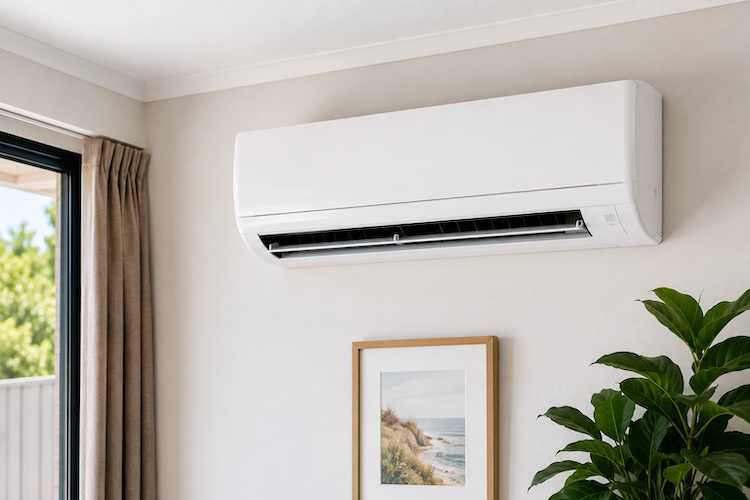
A split system has two main components: the indoor unit and the outdoor condenser.
These are connected using refrigerant piping, electrical cabling and drainage. The further apart the two units are, the more material and labour may be required.
Our standard installation pricing includes up to 3 metres of refrigerant pipe. If the selected indoor and outdoor positions require a longer run, additional pipework may need to be factored into the quote.
Longer pipe runs are often required when:
- The outdoor unit cannot be positioned directly behind the indoor unit
- The indoor unit is located on an internal wall
- The home has multiple storeys
- The condenser needs to be placed away from a walkway or entertaining area
- Building design limits the available installation locations
- Services need to be routed around other structures
The shortest pipe run is not always automatically the best option. A good installation should also consider airflow, drainage, appearance, noise and accessibility for future maintenance.
Does the size of the split system affect installation cost?
It can. Split system air conditioners range from smaller units designed for bedrooms and home offices to larger systems intended for open-plan living areas and commercial spaces.
Larger units can have different piping, mounting and electrical requirements. The outdoor condenser may also be physically larger and heavier, which can influence the installation method.
More importantly, the system should be correctly sized for the room rather than selected purely on price.
An undersized air conditioner may need to work harder to cool or heat the area, while installing a substantially oversized system can mean spending more than necessary.
The required capacity can be influenced by:
- Room dimensions
- Ceiling height
- Roof insulation
- Window area
- Sun exposure
- Room orientation
- Building construction
- How the room is used
- Perth’s climate
If you’re unsure what capacity your room requires, our split system size calculator can provide an estimate based on your room dimensions, sun exposure and insulation.
Does the position of the indoor unit affect the price?
Yes. Indoor unit placement can influence both installation complexity and how well the system performs. Ideally, the unit should be positioned where conditioned air can circulate effectively throughout the room without being unnecessarily obstructed by walls, furniture or other features.
The location must also allow the installer to connect the indoor unit to the outdoor condenser and provide suitable drainage. An apparently convenient location inside the room may require considerably more pipework if the outdoor unit cannot be positioned nearby.
For this reason, it is worth discussing the intended location before making a final decision. A slightly different position may sometimes provide better airflow while also simplifying the installation.
Does outdoor unit placement affect installation costs?
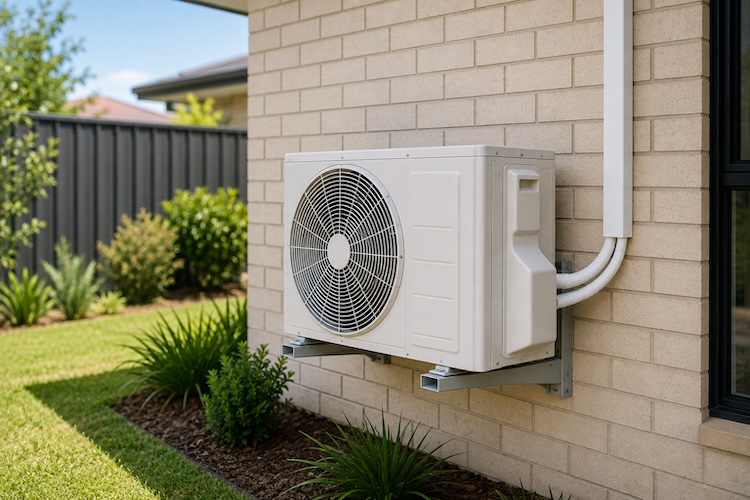
The outdoor condenser requires sufficient ventilation and suitable access.
Where possible, ground-level installations with straightforward access tend to be simpler than installations requiring elevated brackets or difficult access.
However, condenser location should not be chosen solely to reduce the installation price.
Other considerations include:
- Adequate airflow around the unit
- Access for future servicing
- Noise near bedrooms and neighbouring properties
- Protection from unnecessary obstruction
- Drainage
- Available space around the property
- Distance from the indoor unit
In some situations, a wall bracket or alternative mounting arrangement may be the most practical solution.
Do double-storey homes cost more to install air conditioning?
They can.
Installing a split system on the upper floor of a two-storey home can require additional labour and materials, particularly when the outdoor unit remains at ground level. The pipework may need to travel further between the indoor and outdoor units, and access can be more complicated than a typical ground-floor installation.
Every property is different. In some homes, a practical condenser location may keep the installation relatively straightforward. In others, the layout may require a longer pipe run or a different installation method.
Our installation options explain the different configurations that may be available for Perth homes.
Does wall construction make a difference?
Yes. Perth homes can have a variety of wall types, including brick, double brick and timber-framed construction.
Creating suitable penetrations through different materials requires different tools and methods. Double-brick construction, for example, can take more time to work through than some lighter wall systems.
Wall construction is therefore one of the details that can affect the work involved in an installation. This is also why providing photos or arranging an assessment before installation can help produce a more accurate quote.
Can electrical work increase the installation cost?
Depending on the air conditioner and the home’s existing electrical setup, additional electrical work may be required.
Some smaller systems can be connected using suitable existing infrastructure, while larger systems may require a dedicated circuit.
Older Perth properties can also have switchboards that need to be assessed before a new air conditioner is connected.
If additional electrical work is needed, it is better to identify this before installation rather than discover it after the job has started.
Air-Cond Installs WA provides fixed-price quotes in writing so the installation requirements can be agreed upon upfront.
Does removing an old air conditioner affect the price?
If you’re replacing an existing split system, the old unit may need to be disconnected, removed and disposed of before the replacement is installed.
This is an additional consideration compared with installing air conditioning in a room that has never had a system.
The installer will also need to assess whether the previous unit’s location remains suitable for the replacement.
It should not automatically be assumed that every component of an old installation can be reused with a new air conditioner.
If you’re replacing an existing system, you can learn more about our air conditioning removal and disposal service.
Is replacing an existing split system always cheaper?
Not necessarily.
It can seem logical that replacing an existing air conditioner should cost less because there is already an indoor and outdoor unit in place.
However, the old equipment still needs to be removed, and the installer needs to check whether the existing location, electrical setup, drainage and pipe route suit the new system.
Changes may also be required where:
- The new unit has different specifications
- The old installation no longer meets current requirements
- The previous condenser was poorly positioned
- Existing pipework is unsuitable
- The homeowner wants the new unit moved
- Access to the old system is difficult
For this reason, replacement installations should still be assessed individually.
Is it cheaper to buy your own split system?
Sometimes a retailer may advertise an air conditioner at an attractive price, but the cheapest unit does not necessarily result in the lowest overall installed cost.
Before purchasing your own system, you need to make sure it is suitable for:
- The size of the room
- The electrical setup
- The proposed installation location
- Your heating and cooling requirements
- The intended use of the room
Buying a unit that is too small, unnecessarily large or difficult to install can create extra costs later. If you’re comparing systems, our split system air conditioner buying guide explains the main factors to consider before choosing a unit.
Air-Cond Installs WA offers both supply and installation and install-only services, so you can still contact us if you have already purchased your air conditioner.
How long does a split system installation take?
Installation time depends on the complexity of the job.
A standard single-split installation will usually be considerably more straightforward than a double-storey installation, a long pipe run or a job requiring additional access work. The amount of labour involved can therefore have an impact on both installation time and cost.
If you’re planning around installation day, read our guide explaining how long a split system installation takes and what can affect the timeframe.
How can you avoid unexpected air conditioning installation costs?
The best way to avoid surprises is to provide as much information as possible before accepting a quote.
Useful details can include:
- Which room you want to air condition
- Approximate room dimensions
- Whether the home is single or double-storey
- Where you would prefer the indoor unit
- Possible outdoor condenser locations
- Whether an old unit needs to be removed
- Photos of the inside and outside installation areas
- Whether you have already purchased an air conditioner
This gives the installer a better understanding of the job and makes it easier to identify anything that could affect the price.
Air-Cond Installs WA provides fixed-price quotes in writing so you know the agreed cost before work begins.
Should you choose the cheapest installation quote?
Price is important, but it should not be the only consideration.
A split system air conditioner may remain in your home for many years, so the quality and practicality of the installation matter.
A properly planned installation should consider:
- Correct system sizing
- Indoor airflow
- Outdoor condenser ventilation
- Drainage
- Pipe routing
- Electrical requirements
- Appearance
- Future access for maintenance
Choosing a system based solely on the lowest upfront installation price can be poor value if the unit is incorrectly sized or positioned.
When comparing quotes, look at what is included as well as the final figure.
What should you look for in a split system installation quote?
A useful quote should clearly explain what is included and identify any work that falls outside the standard installation.
Depending on the property, this may include:
- Supply of the air conditioner
- Installation labour
- Refrigerant pipework
- Electrical connection
- Mounting equipment
- Additional pipe length
- Brackets
- Removal of an existing unit
- Additional electrical work
Air-Cond Installs WA publishes our standard split system supply and installation prices online so you can see current package pricing and what is included before requesting a quote.
Get a split system installation quote in Perth
There is no single installation setup that suits every Perth home.
The final cost depends on the system being installed, the property layout and the work required to install it correctly.
Air-Cond Installs WA is a family-run Perth business founded by brothers Wayne and Glen. With more than 30 years of industry experience, we provide split system supply and installation for homes and businesses throughout Perth.
Our pricing is transparent, and quotes are provided in writing before work begins.
If you’re considering a new air conditioner, start by checking our current split system prices or contact Air-Cond Installs WA for a free quote based on your property.
Frequently asked questions
What is the biggest factor affecting split system installation cost?
There is no single factor in every installation, but pipe run length, access, property layout, wall construction and electrical requirements are among the most common reasons costs vary.
Is a back-to-back split system installation cheaper?
A back-to-back installation is generally one of the simpler installation layouts because the indoor and outdoor units are positioned close together. This can reduce the amount of pipework and labour required.
How much refrigerant pipe is included in a standard installation?
Air-Cond Installs WA’s standard supply and installation pricing currently includes up to 3 metres of refrigerant pipe. Additional pipework may increase the final cost.
Does a double-storey home cost more for split system installation?
It can. Upper-storey installations may require longer pipe runs, additional materials or more difficult access. The exact cost depends on the layout of the property and where the indoor and outdoor units can be positioned.
Can I reduce installation costs by putting the outdoor unit directly behind the indoor unit?
A shorter pipe run can make an installation simpler, but unit placement should not be based on price alone. Airflow, drainage, condenser ventilation, noise and future servicing access also need to be considered.
Can I buy my own split system and have it installed?
Yes. Air-Cond Installs WA offers install-only services as well as supply and installation. It is worth confirming the unit is correctly sized and suitable for your property before purchasing.
Will I know the final price before installation?
Air-Cond Installs WA provides fixed-price quotes in writing before work begins. This allows any factors affecting the installation to be identified and agreed upon upfront.